
Best Fabrics for Formal Dresses Types, Weight, Drape
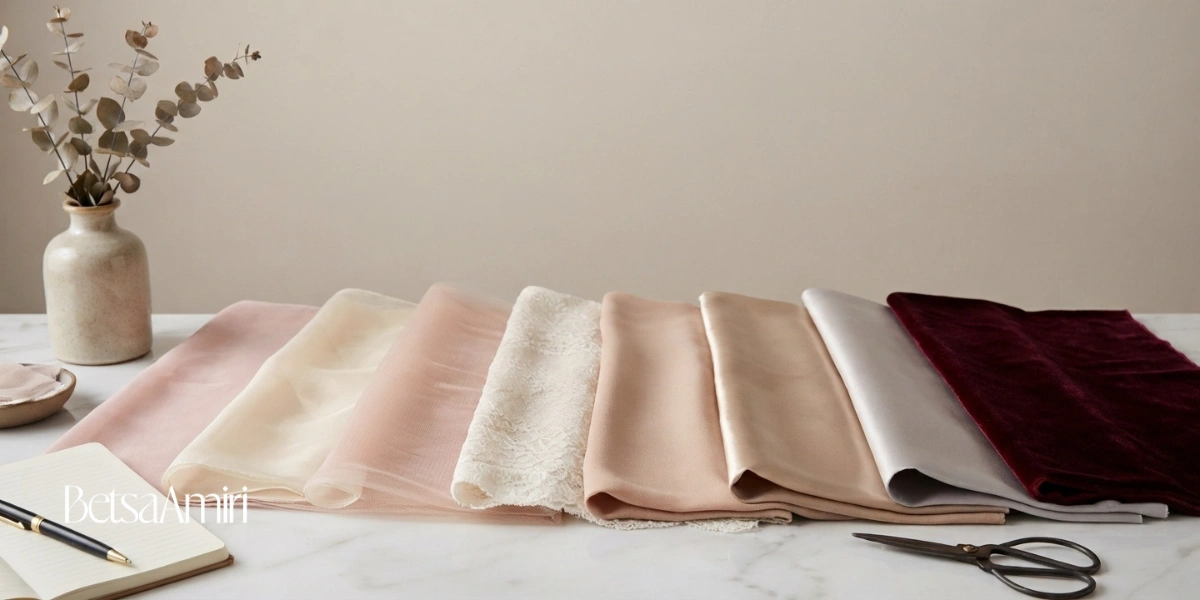
Fabrics for Formal Dresses influence far more than the colour or shine of an outfit. They determine how the dress falls on the body, how it moves while walking, how comfortable it feels after several hours and whether it looks soft, structured, dramatic or understated.
A dress can look beautiful on a hanger but feel completely different when worn. Chiffon may create graceful movement but require careful lining. Satin can reflect light beautifully but show creases more easily. Velvet may give a rich, luxurious appearance but feel too warm for an outdoor event in Dubai. Crepe usually creates a cleaner silhouette, while tulle and organza can add volume without making the entire dress feel heavy.
The right fabric depends on the event, venue, season, dress shape and level of coverage you want. A material suitable for a formal dinner may not be the best choice for a summer wedding or a long evening reception. Understanding these differences helps you choose a dress that looks elegant in photographs and remains comfortable throughout the occasion.
What Makes a Fabric Suitable for a Formal Dress?
Fabrics for Formal Dresses should be judged by more than their colour, shine or price. A suitable fabric needs to support the shape of the dress, feel comfortable on the body, provide the right level of coverage and remain presentable throughout the event. A beautiful material can still be the wrong choice if it becomes too warm, creases easily or fails to hold the structure of the design.
The first quality to consider is how the fabric behaves. Some materials fall softly around the body, while others create a firm and defined shape. A flowing evening gown needs movement, but a structured bodice or full skirt needs a fabric with more body. Choosing the wrong level of structure can change the entire appearance of the dress.
Weight is also important, but heavier does not always mean better. A heavy fabric may look luxurious and create a strong silhouette, yet feel uncomfortable during a long event. Lightweight fabric may feel cooler and easier to wear, but it can require lining or additional layers for proper coverage and support.
The fabric should also suit the details of the design. Delicate materials may work well for sleeves and overlays but may not support heavy embroidery or beading. A stable fabric is usually more suitable for embellishments, fitted bodices and defined seams.
For formal events in Dubai, comfort should not be ignored. The dress may be worn outdoors, inside an air-conditioned venue and during several hours of movement. The best fabric is the one that balances appearance, structure, coverage and comfort rather than focusing on only one feature.
Fibre, Weave and Finish Explained
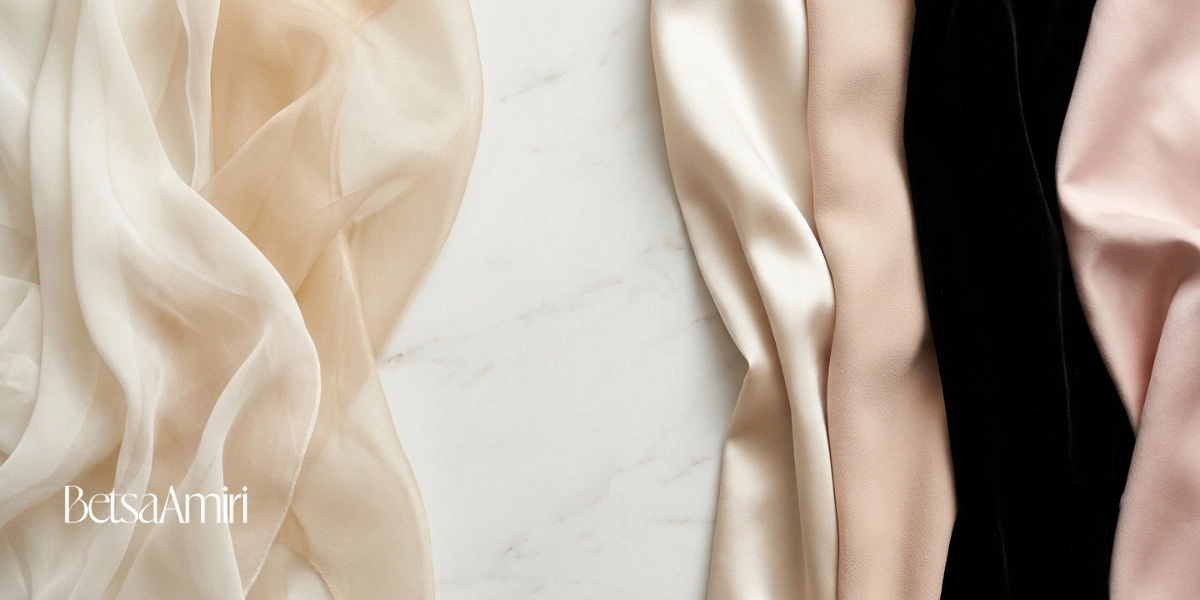
A fabric name does not always tell you exactly how the material will feel or perform. To understand it properly, you need to look at three things: the fibre, the construction and the finish.
The fibre is the material used to make the threads. Common examples include silk, cotton, wool, polyester, viscose and nylon. Natural fibres can feel soft and breathable, while synthetic fibres may offer stronger colour, easier care and better resistance to creasing. Neither option is automatically better; the right choice depends on the design and how the dress will be worn.
The construction explains how the threads are woven or knitted together. Satin, lace, jersey and twill describe the way a fabric is made or structured, not always the fibre itself. For example, satin can be made from silk, polyester or a blend. A silk satin dress and a polyester satin dress may look similar, but they can feel very different on the body.
The finish is the treatment applied to the fabric after construction. It can make the material softer, shinier, stiffer, brushed or more textured. Finishing can completely change the appearance of a dress and the way it reacts to light.
This distinction is important when choosing a formal dress. Instead of asking only for “satin” or “crepe,” ask about the fibre content, stretch, lining, weight and care requirements. These details help you understand whether the fabric will feel comfortable, hold the desired shape and remain suitable for a long formal event.

Which Fabric Works Best for Each Dress Shape?
The shape of the dress should guide your fabric choice. A material that looks beautiful on its own may not create the right result when used for a fitted dress, a flowing gown or a full skirt.
Fabrics for Fitted Dresses
Fitted dresses usually need a smooth fabric that follows the body without becoming too thin or uncomfortable. Crepe, stretch crepe and medium-weight satin can create a clean and polished shape. Very lightweight fabrics may show body lines, while heavy materials can make the dress feel stiff.
Fabrics for Flowing Gowns
For a dress that moves softly while walking, choose fabrics with a natural drape. Chiffon, georgette and silk charmeuse work well for flowing skirts, cape sleeves and layered designs. These fabrics create an elegant appearance but may need lining for better coverage.
Fabrics for Full Skirts and Structured Designs
Full skirts and defined bodices need materials that can hold their shape. Mikado, duchess satin, taffeta and brocade provide more structure and create a stronger formal look. Organza and tulle can add volume without making the entire dress feel too heavy.
Fabrics for Modest and Embellished Dresses
For modest designs, the fabric should be opaque enough for the bodice, sleeves and neckline. If the dress includes embroidery, beads or heavy decoration, the base fabric must also be strong enough to support the added weight.
The simple rule is to choose the dress shape first and the fabric second. This is especially important when selecting wedding dresses, because the fabric affects the dress’s shape, movement and comfort.
Which Fabric Is Right for Your Dress?
Choose an event or dress shape. Suitable fabrics will turn green.
Select an event or dress shape to see suitable fabrics.
Best for:
Weight and drape:
Consider:

Which Fabric Is Best for Your Event?
The same fabric does not suit every occasion. Velvet, brocade, mikado and heavier satin can look elegant at indoor receptions, formal dinners and evening celebrations. For outdoor events in Dubai, chiffon, georgette and lightweight crepe may feel more comfortable, especially when the dress will be worn for several hours.
The venue also affects the choice. A ballroom allows more structure and layering, while an outdoor celebration may require lighter fabric and breathable lining. Before choosing, think about the temperature, the length of the event, how much you will move and how the fabric will look in photographs.
Choosing Fabric for a Custom Dress
Before ordering a custom dress, decide where you will wear it, how much coverage you want and whether you prefer a flowing or structured shape. Tell the designer how long the event will last, whether it is indoors or outdoors and how freely you need to move.
The fabric, lining, sleeves, embellishments and final shape should be planned together before cutting begins. If you need changes to the design, fit, length or fabric, a custom dress consultation helps ensure that the final dress suits both your personal style and the occasion.
Frequently Asked Questions
Which fabric is best for a formal dress in Dubai?
Chiffon, georgette and crepe are comfortable choices for warm weather. Satin, velvet and brocade are better suited to air-conditioned evening venues.
Which fabric works best for a fitted formal dress?
Crepe is a reliable choice because it follows the body with a smooth, controlled drape. Satin can also work well when a polished and reflective finish is preferred.
Do formal dresses always need lining?
Not always, but lightweight and semi-transparent fabrics often need lining for coverage, comfort and a cleaner finish. Lining also helps the dress keep its shape.
Which fabric is suitable for a summer wedding?
Chiffon, georgette, crepe and lace are practical options for a summer wedding. For an outdoor venue, choose a breathable lining and avoid very heavy fabrics.
How do I choose the right fabric weight?
Choose lightweight fabric for movement and warm venues, medium-weight fabric for versatility, and heavy fabric when you need more structure, warmth or a dramatic appearance.

Betsa Amiri Editorial Team creates and reviews content about abayas, eveningwear, custom dresses, garment care and contemporary women’s fashion. The team provides clear and practical information based on Betsa Amiri’s experience in bespoke womenswear and serving clients in Dubai.