Basque Waist vs Drop Waist Which Suits You Best?
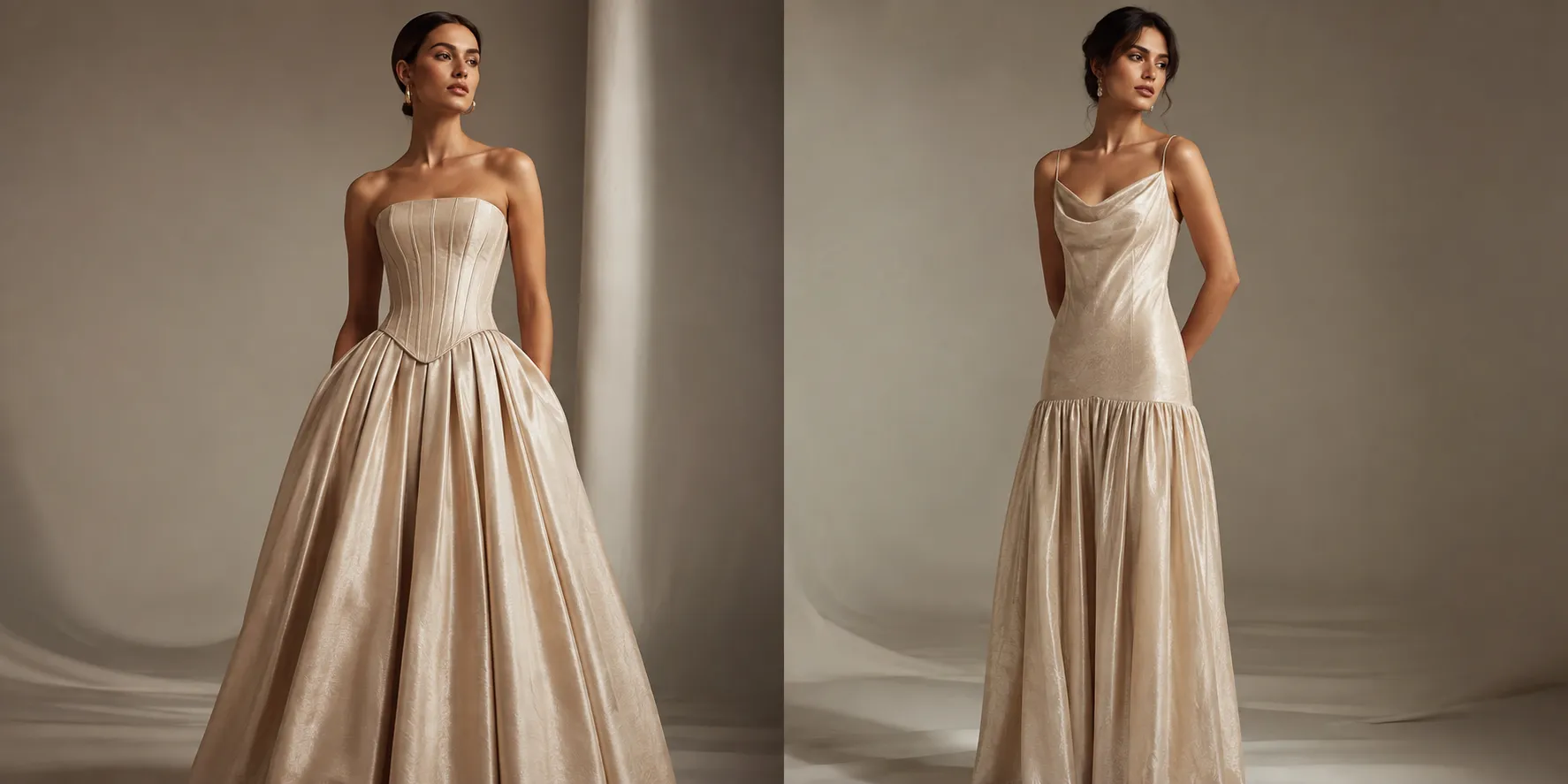
A Basque waist and a drop waist both sit lower than the natural waist, but they create very different proportions. A Basque waist usually dips into a V or U shape at the front, which draws attention toward the center of the body and can make the waist look more defined. A drop waist lowers the waistline more evenly toward the upper hip, creating a longer-looking torso and a straighter, more elongated silhouette.
The better choice depends less on your “body type” and more on the effect you want from the dress. If you want stronger waist definition and a more sculpted shape, Basque is usually the better starting point. If you prefer a longer torso line, less emphasis on the natural waist, or a more relaxed silhouette, a drop waist may work better. The key is understanding how each waistline changes the visual balance between your torso, waist, hips, and legs. That is what we will compare throughout this guide.
How Each Waistline Changes Your Proportions
A Basque waist changes proportion mainly through its pointed center. Because the waistline stays higher at the sides and drops only through the front, the eye is drawn downward through the middle of the body rather than straight across it. This can make the waist appear narrower while creating a smoother transition into the hips and skirt.
A drop waist works differently because the seam sits lower across most of the torso. The bodice therefore continues past the natural waist before the skirt begins, which visually increases torso length. The trade-off is that the legs may appear slightly shorter, particularly when the dropped seam sits very low or the skirt has a lot of volume. This means the real choice is about proportion: Basque redistributes attention toward the waist and center of the body, while Drop Waist redistributes length from the legs toward the torso.

Bust, Waist and Hip Balance
The same Basque or drop waist can look completely different depending on how the bust, waist, and hips relate to each other. A Basque waist usually works best when the dress has enough structure through the bodice to keep the waistline clean and controlled. On a fuller bust, that structure becomes especially important; without enough support, the pointed waist can lose its shape and the dress may pull upward through the front.
Hip proportion also matters. If the hips are more pronounced, a Basque waist can create a smoother transition into the skirt because the line naturally directs the eye downward through the center. A drop waist, however, places more visual emphasis around the upper hip, so the exact height of the seam becomes important. If it ends at the widest part of the hip, it can make that area appear broader. This is why fit matters as much as the waistline itself. A well-placed seam can improve balance, while the same design positioned only a few centimeters too high or too low can change the entire silhouette.
Not Sure Which Waistline Suits You?
Fabric and Structure Can Change the Same Waistline
The waistline alone does not determine the final silhouette. A Basque waist in structured crepe or satin-backed fabric will look sharper and more sculpted than the same cut in soft chiffon. If the design relies on a clear V-shaped waist, internal support such as boning or a firmer bodice helps keep that line visible instead of letting it collapse or wrinkle.
Drop Waist designs react differently to fabric. In a fluid material, the lowered seam can create a softer, more relaxed line through the hips. In a structured fabric, the same seam becomes much more noticeable and can add volume exactly where the skirt begins. This is why a Drop Waist dress that looks sleek in silk may feel much heavier in taffeta or heavily embellished fabric.
For both styles, check how the fabric behaves around the seam. If it bunches, pulls, or creates unnecessary bulk where the bodice meets the skirt, the waistline will lose the effect it is supposed to create.
Basque Waist vs Drop Waist in Night Dresses
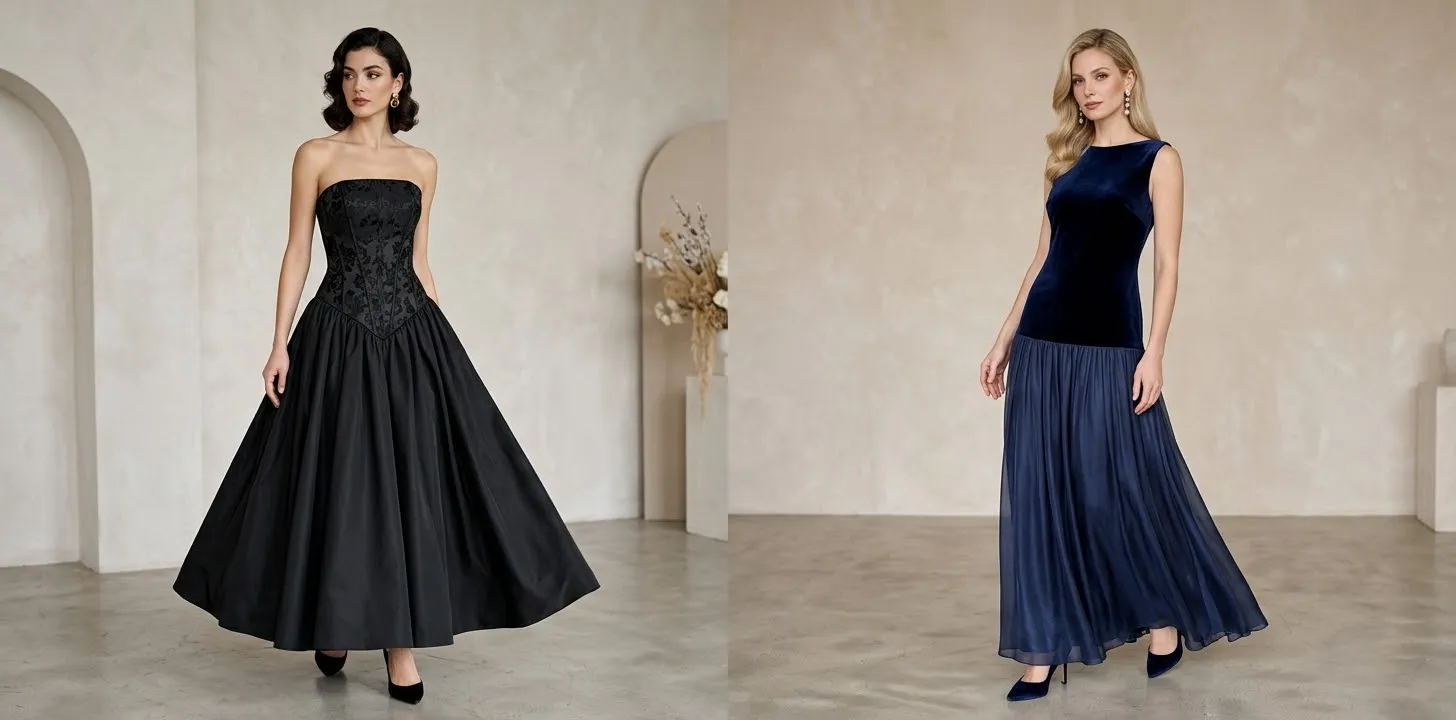
In eveningwear, the waistline affects more than fit; it changes the entire character of the dress. A Basque waist usually gives the gown a more sculpted and dramatic look because the bodice appears to extend into the skirt rather than ending at a straight horizontal seam. It works particularly well with fitted bodices, corset-inspired construction, and skirts that open gradually from the hip. This is also why Basque details are often seen in more structured Night dresses in Dubai, where the waist itself becomes part of the main design.
A Drop Waist creates a different effect. Because the skirt begins lower on the body, the dress often looks longer and more streamlined through the torso. With a slim skirt, this can feel clean and modern; with a fuller skirt, the volume begins closer to the hips and creates a more pronounced change between the upper and lower parts of the dress.
For formal evening dresses, the choice should therefore consider the whole silhouette. A Basque waist usually suits designs where the waist itself is part of the visual focus, while a Drop Waist works better when the designer wants the eye to travel continuously down the torso before the skirt becomes the main feature.
When to Choose Basque Waist or Drop Waist
At this stage, the choice should come down to the effect you want from the finished dress rather than which style is currently more popular. Look at where you want the eye to focus and how you want the bodice to connect with the skirt.
- Choose Basque Waist if you want the waist itself to become a feature of the dress and prefer a more sculpted, corset-inspired silhouette.
- Choose Drop Waist if you want the bodice to continue lower over the torso and prefer a longer, cleaner line before the skirt begins.
- Choose Basque Waist with a fuller skirt when you want the skirt volume to start from a clearly defined waist without creating extra width across the upper hips.
- Choose Drop Waist with a slim or controlled skirt if you want to keep the silhouette elongated and avoid adding too much volume around the hip line.
- Be careful with a very low Drop Waist if your legs already appear shorter in proportion to your torso, because lowering the skirt start can exaggerate that effect.
- Adjust the depth rather than abandoning the style. A shallow Basque or moderately dropped waist can often give better proportions than an extreme version of either design.
Final Fit Check Before You Decide
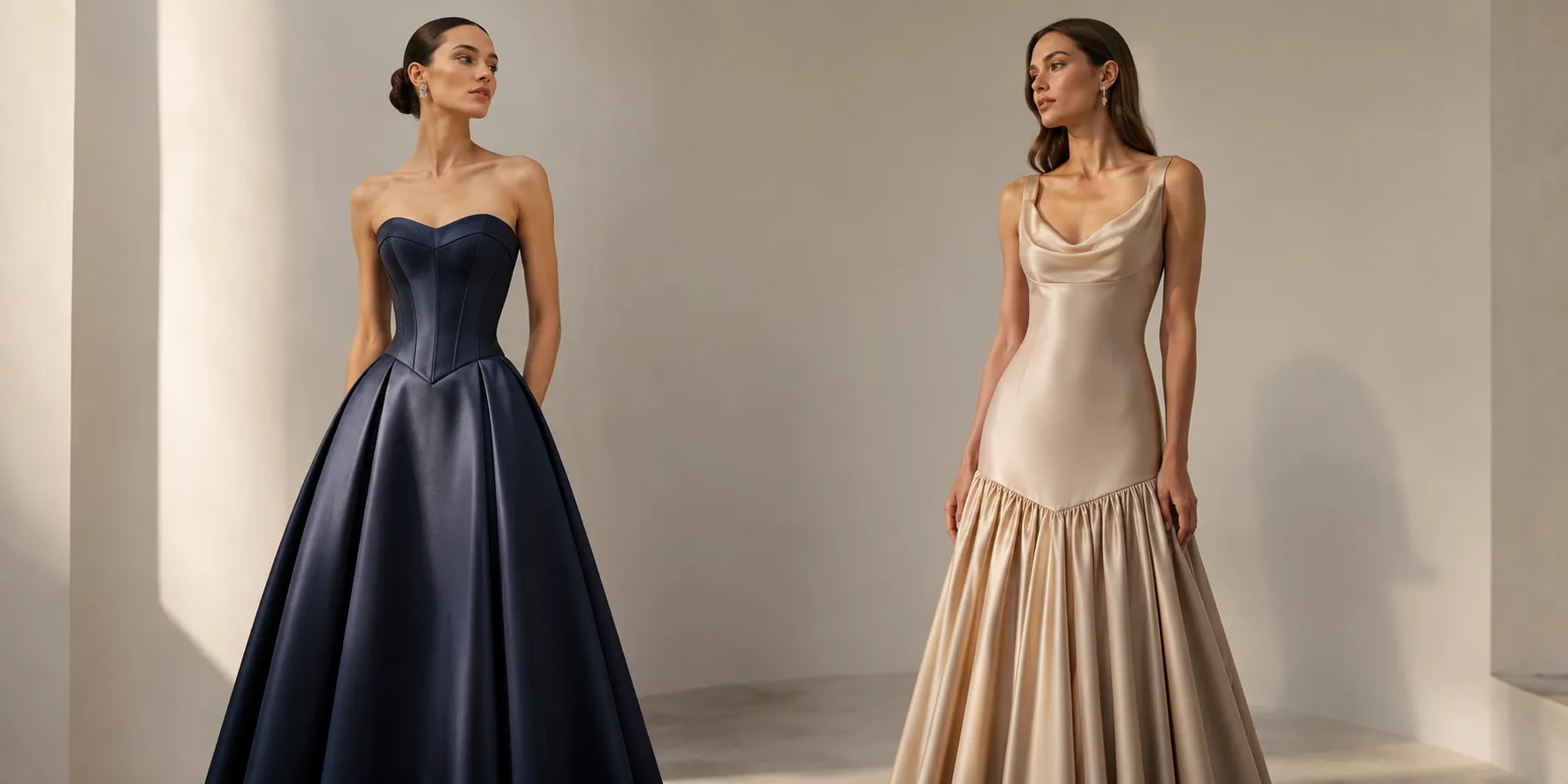
Before choosing between a Basque waist and a Drop Waist, look at the dress on your body rather than judging the design only from photos. Check where the waist seam actually sits, whether the bodice stays smooth when you sit and move, and whether the skirt begins at a flattering point on the hips.
A good fit should make the intended silhouette clearer, not force your body into it. If the seam pulls upward, creates bulk at the hips, or makes the torso look disproportionately long or short, the issue may be the placement of the waistline rather than the style itself.
Choosing the Right Waistline for Your Dress
Basque Waist and Drop Waist can both create a strong silhouette, but they do it in different ways. Basque Waist is usually the better choice when you want stronger waist definition, a more sculpted bodice, and a clear transition into the skirt. Drop Waist works better when the goal is a longer torso line and less emphasis on the natural waist.
The final decision should come down to proportion, fit, and the overall design of the dress. A well-placed waistline that works with your torso, hips, and skirt shape will usually look better than choosing a style simply because it is trending.
Frequently Asked Questions
Does a Basque waist make your waist look smaller?
It can create stronger waist definition because the pointed or curved center directs attention toward the middle of the body. The effect is usually strongest when the bodice is properly fitted and has enough structure to hold the Basque shape cleanly.
Does a drop waist make your legs look shorter?
A very low drop waist can make the torso appear longer, which may make the legs look proportionally shorter. The effect depends on how low the waistline sits, the length of the skirt, and your natural torso-to-leg proportions.
Is a Basque waist suitable for a short torso?
Yes, but the depth of the Basque matters. A controlled V-shaped waist can visually lengthen the center of the torso, while an excessively deep Basque may overwhelm a shorter bodice. Fit and seam placement are more important than following a fixed body-type rule.
Can a drop waist work with wider hips?
Yes, but the position of the dropped seam should be considered carefully. If the seam ends directly across the widest part of the hips, it may add more visual emphasis there. A slightly higher drop or a smoother skirt transition can create a more balanced result.
Which is better for an evening dress: Basque waist or drop waist?
Choose a Basque waist if you want stronger waist definition, a sculpted bodice, or a corset-inspired look. Choose a drop waist if you prefer a longer torso line and a cleaner transition before the skirt begins. The best option ultimately depends on the overall silhouette and fit of the dress.

Betsa Amiri Editorial Team creates and reviews content about abayas, eveningwear, custom dresses, garment care and contemporary women’s fashion. The team provides clear and practical information based on Betsa Amiri’s experience in bespoke womenswear and serving clients in Dubai.